Morse code is easy enough to learn. And it’s definitely not something that can be mastered in a day or two. The alphabet consists of simple ingredients—just dits and dahs, with a small number of symbols. But to build the kind of usable skill you’ll need to actually use the language of the radio, you’ll need to study regularly and dedicate yourself to learning its patterns.
Morse is a language that begins with single-signal letters—one dit is “E,” one dah is “T”—and then quickly moves into combinations of short signals. These are the easiest ways to enter the language of the radio. As you begin to learn these individual pieces, they will combine into more complex characters until you can read the full range of information from written dots and dashes, as well as sound-based Morse code.
Fluent listening to Morse means recognizing whole rhythm patterns rather than counting how many dits or dahs there are or looking each character up in a chart. While this may take some time, it does eventually happen. The question for most beginners is: What does progress look like?
Proficiency goals
There are four realistic proficiency goals you can judge your progress against, especially the gap between being able to recognize the alphabet and being able to copy real-time audio:
Recognize the alphabet
Copy audio by ear
Exchange simple CW-style traffic
Chase high-speed mastery
The difference between copying characters versus sending them is significant, which is why the last goal is difficult to achieve for most people. There’s also a useful distinction between character speed and effective message speed. In order to keep a continuous message manageable (and prevent your brain from feeling overwhelmed), spacing is usually widened. However, this slows down the pace of the overall message, while preserving the rhythm that we expect from Morse code.
Beginner practice approach
To help beginners, here’s an approach I recommend. In Koch-style drills, don’t add another character until you can copy the current set at roughly 90% accuracy:
Learn the acoustic shapes of the characters first. Use audio recordings, either online or via a trainer, to practice.
Listen for pauses. This separates one character from another.
Slow playback. If the program doesn’t allow you to slow down the playback rate, just turn on “loop” mode so you can repeat a segment multiple times.
Work with short messages. Try exchanging a few words with another amateur radio operator.
Review consistently. Set aside 15-30 minutes per day for learning, or try working on a 20-30 minute session in the evening.
Avoiding beginner traps
When it comes to practicing, you don’t want to start out by trying to work through all the steps required by radio procedures. Instead, I think structured drills should lead to continuous audio. That’s where many beginners fall into a trap, however: using a chart or looking up the alphabet as they go. To get around that, use the chart only at first, then move toward hearing the sounds and learning the rhythm instead.
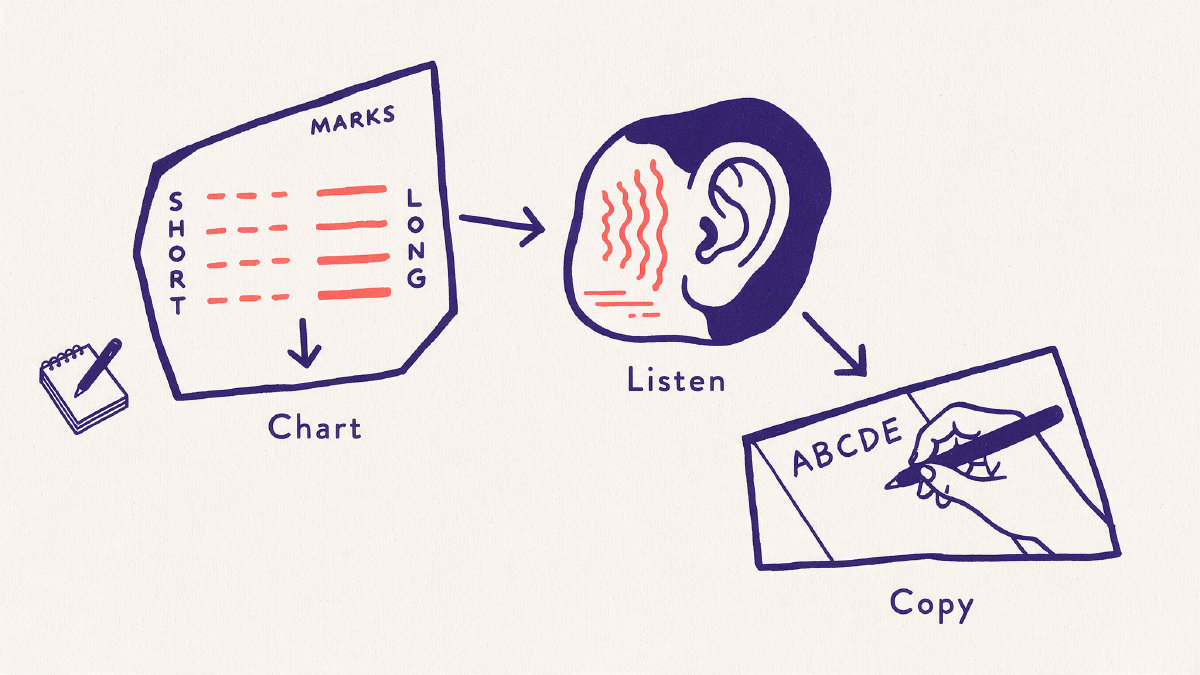
The same applies to other tools, too. Many new amateurs find themselves interested in prosigns and callsigns. Others want to add numbers, and perhaps even QSO rhythm. Don’t rush into anything that’s too much for you. Start with what interests you, but know that you can always revisit other areas after building a solid foundation.